.png?width=200&height=200&name=Tripti%20(2).png)
Our Approach to Public Speaking
Express Yourself | Share Your Essence | Speak With Purpose
Public Speaking is more than just a skill. It is a Repertoire.
Public speaking is one of the most sought-after confidence-building skills and, at the same time, one of our greatest fears—75% of people experience some form of fear related to speaking in public. Most courses focus on techniques—voice modulation, body language, structuring content, storytelling, and stage presence. Public speaking is often framed as a tool for persuasion or validation.
This Program Takes a Different Path
Rather than just teaching techniques, this program helps you build a repertoire that allows you to tap into your presence and share your life, self, and experiences with your audience. It is rooted in:- Trust—in yourself, your audience, and human nature.
- Intelligence—trusting people to make decisions for themselves.
- Empathy—the ability to see the world through another’s eyes.
- Openness—the rewards of giving rather than controlling.
- Purpose—every moment as part of a larger design.
- Connection—public speaking is about those who receive, not just those who speak.
Public speaking is not about performance—it is about offering something real.

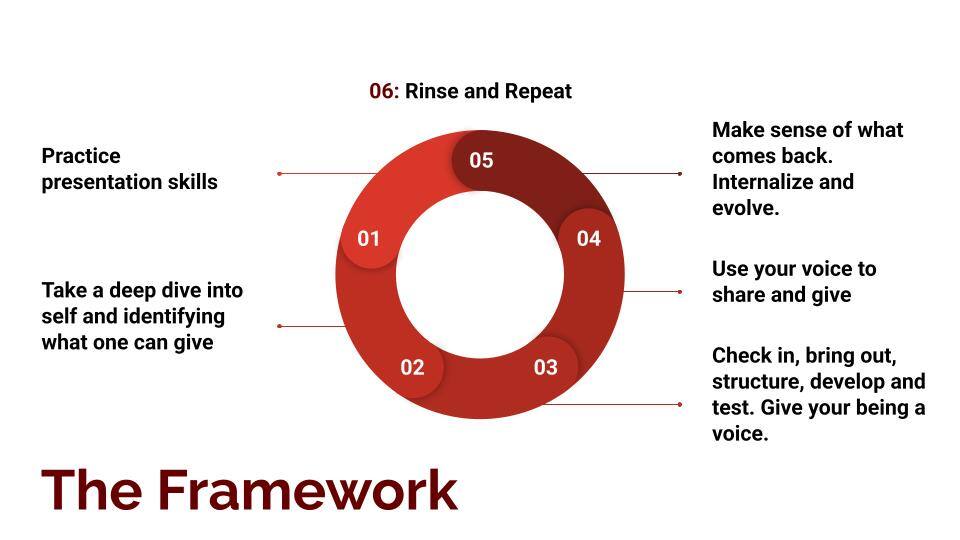
The Sync Framework: A Holistic Approach
This program is structured around the Sync Framework, which ensures that every aspect of public speaking aligns for optimal impact. It organizes public speaking into six essential components: Speaker, Audience, Context, Need, Modality, and Goal. By considering these factors, speakers develop clarity, adapt seamlessly, and engage with purpose.
Developing a Public Speaking Repertoire
This work focuses on helping speakers develop a repertoire that allows them to engage thoughtfully with different speaking situations.
Through this approach, speakers learn to:
-
recognise the impact of presence in spoken communication
-
navigate group dynamics with awareness and intent
-
respond to audiences in ways that are purposeful and meaningful
-
draw from lived experience rather than rehearsed performance
-
communicate with clarity and direction
-
work with emotions as part of the speaking process
-
use the voice with steadiness and intention

This approach resonates with those who see public speaking as more than performance. It is often aligned with leaders, professionals, and individuals who want to articulate their experiences with depth, presence, and intention.